
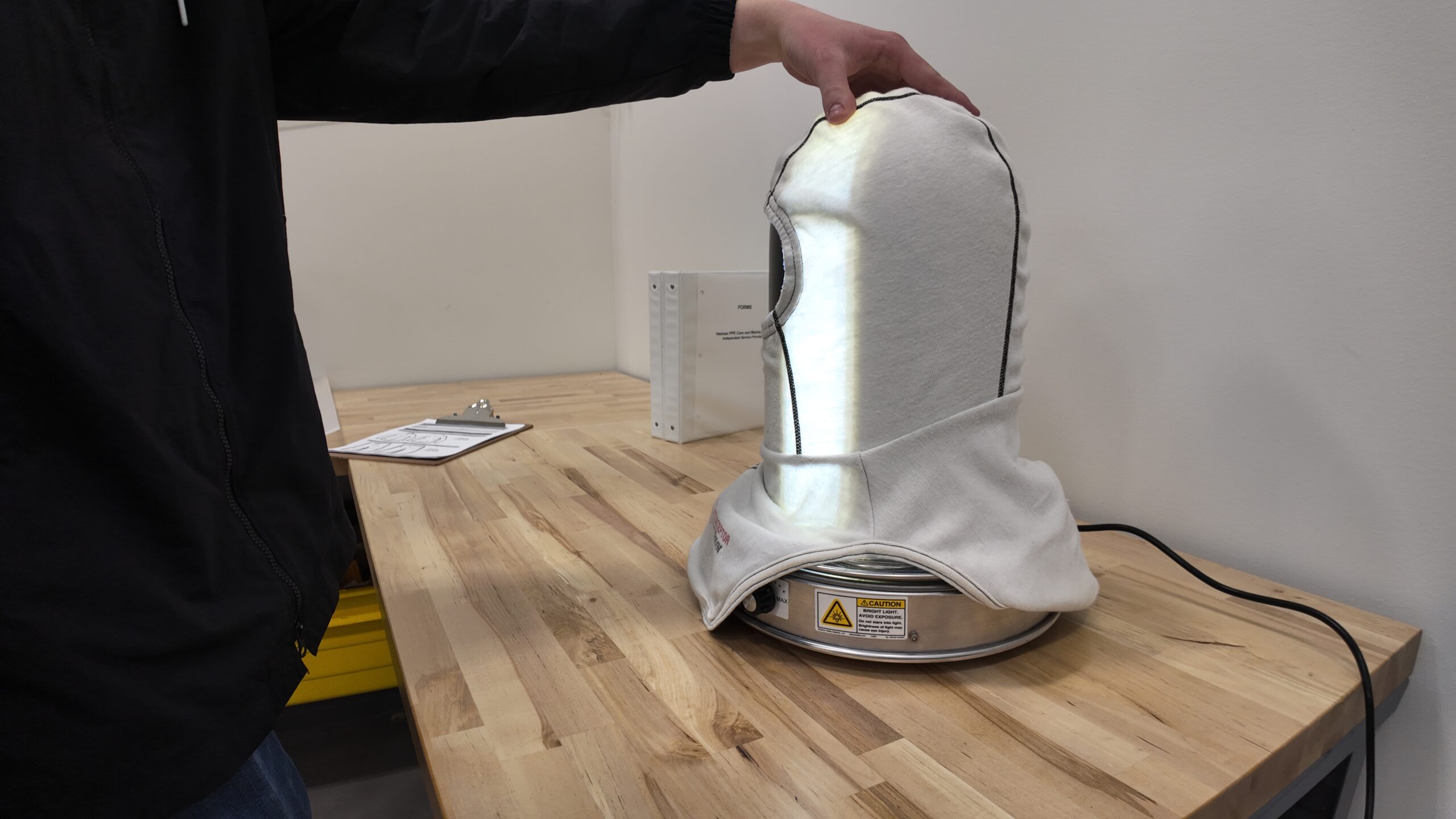
The ensemble’s weakest points are its interfaces: the neck and hood overlap, the coat-to-glove wrist junction, and the waist — and the neck and jaw absorb contaminants at some of the highest rates on the body. Interface discipline is cheap protection for the areas that matter most.
Why are the interfaces the danger zones?
Every closure is a gap that moves. Reaching extends the wrist gap; looking up opens the collar; crawling shifts the hood. Meanwhile the skin at the neck and jaw is thin, warm, and vascular — conditions that increase dermal absorption of the combustion products your gear just swam through.
What closes the gaps?
- Hood-collar discipline: hood bib fully under the coat, collar up and closed — every time, checked in the buddy check.
- Glove-sleeve overlap: wristlets seated, gloves over or under per your ensemble’s design — know which yours is.
- Correct fit: sleeves that ride up and collars that stand off are fit failures; fix them at issue, not on scene.
- Particulate-blocking hoods: designed for exactly this exposure route — and they only work clean.
What does hygiene add after the fire?
On-scene neck and hand wipes remove a large share of settled contaminants before they absorb; shower within the hour; and get the hood into the wash — it took the worst of it. A hood worn filthy re-doses the neck on every call.
FAQ
How often should hoods be cleaned?
After every products-of-combustion exposure — hoods are the cheapest garment to wash and the closest to your skin.
Can worn-out wristlets be replaced?
Yes — wristlet replacement is a routine bench repair. Request a quote; it is far cheaper than the coat it saves.