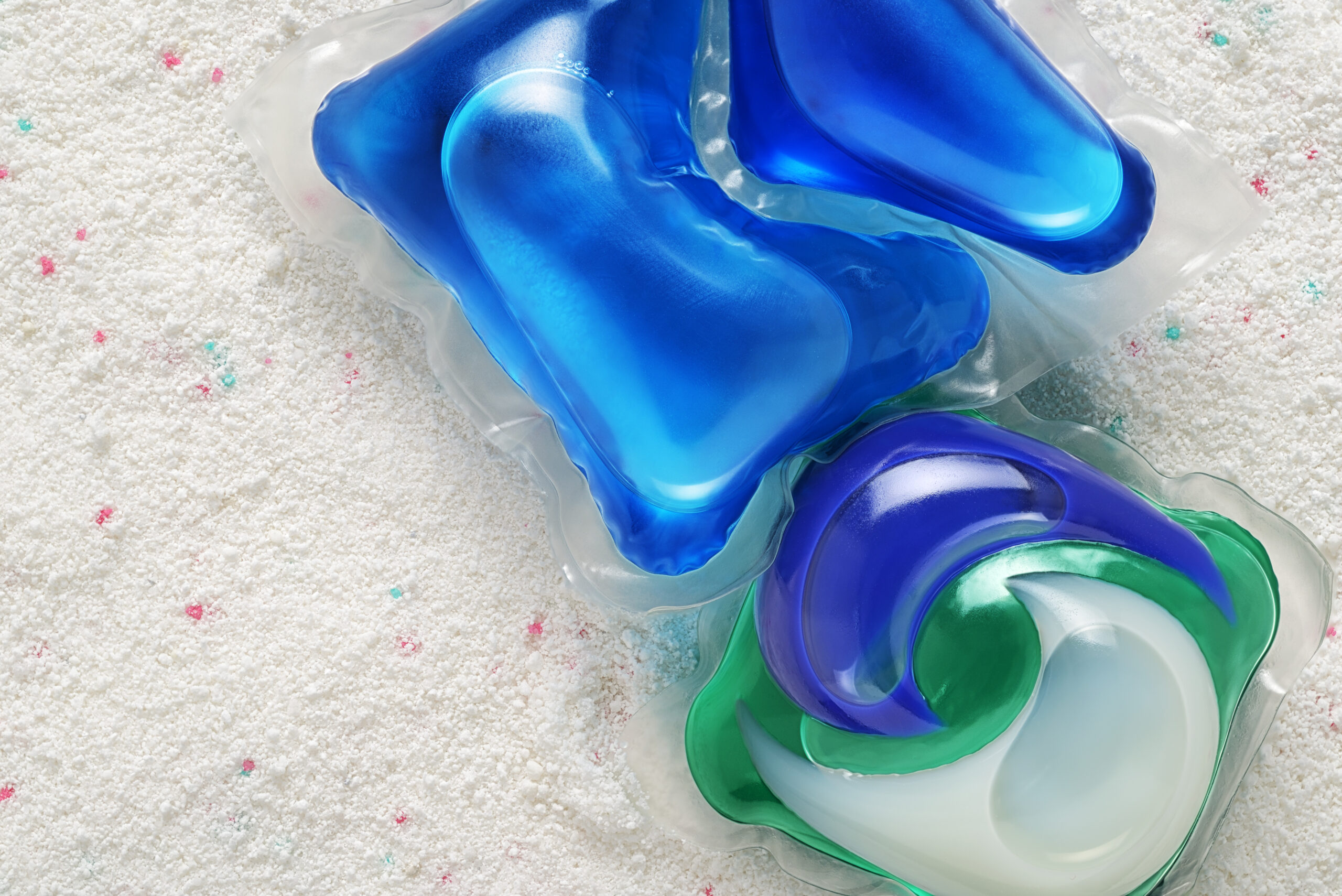
Household laundry detergent fails turnout gear on three counts: pH outside the safe range, optical brighteners and softeners that coat technical fabrics, and — in many formulas — oxidizers that attack moisture barriers. The soap that brightens a t-shirt quietly strips the protection out of a $3,500 ensemble.
What does the wrong pH do to gear?
Turnout gear manufacturers specify cleaning solutions in a mild pH band. Strongly alkaline detergents — most heavy-duty household formulas — degrade aramid fibers over repeated washes and accelerate hydrolysis in moisture barrier laminates. The damage is cumulative and invisible until a barrier fails testing.
Why are brighteners and softeners a problem?
- Optical brighteners deposit UV-fluorescent residue — some manufacturers flag them for degrading outer-shell water repellency.
- Fabric softeners coat fibers with a film that traps contaminants and wrecks moisture-vapor transfer — the property that keeps steam burns off your crews.
- Chlorine bleach is flatly prohibited: it attacks aramids directly.
What should departments use instead?
A cleaner formulated for fire PPE, dosed per label, in a programmable extractor — that is the entire recipe. We stock Citro Squeeze for exactly this reason, and our advanced cleans use validated chemistry matched to each gear system.
FAQ
We washed gear in regular detergent for years. Is it ruined?
Not necessarily — but its barriers and finishes should be tested. An advanced inspection will tell you what condition the gear is truly in.
Is dish soap okay for spot cleaning?
No. Spot-treat with PPE-approved cleaner only — anything else risks the finish in that spot.