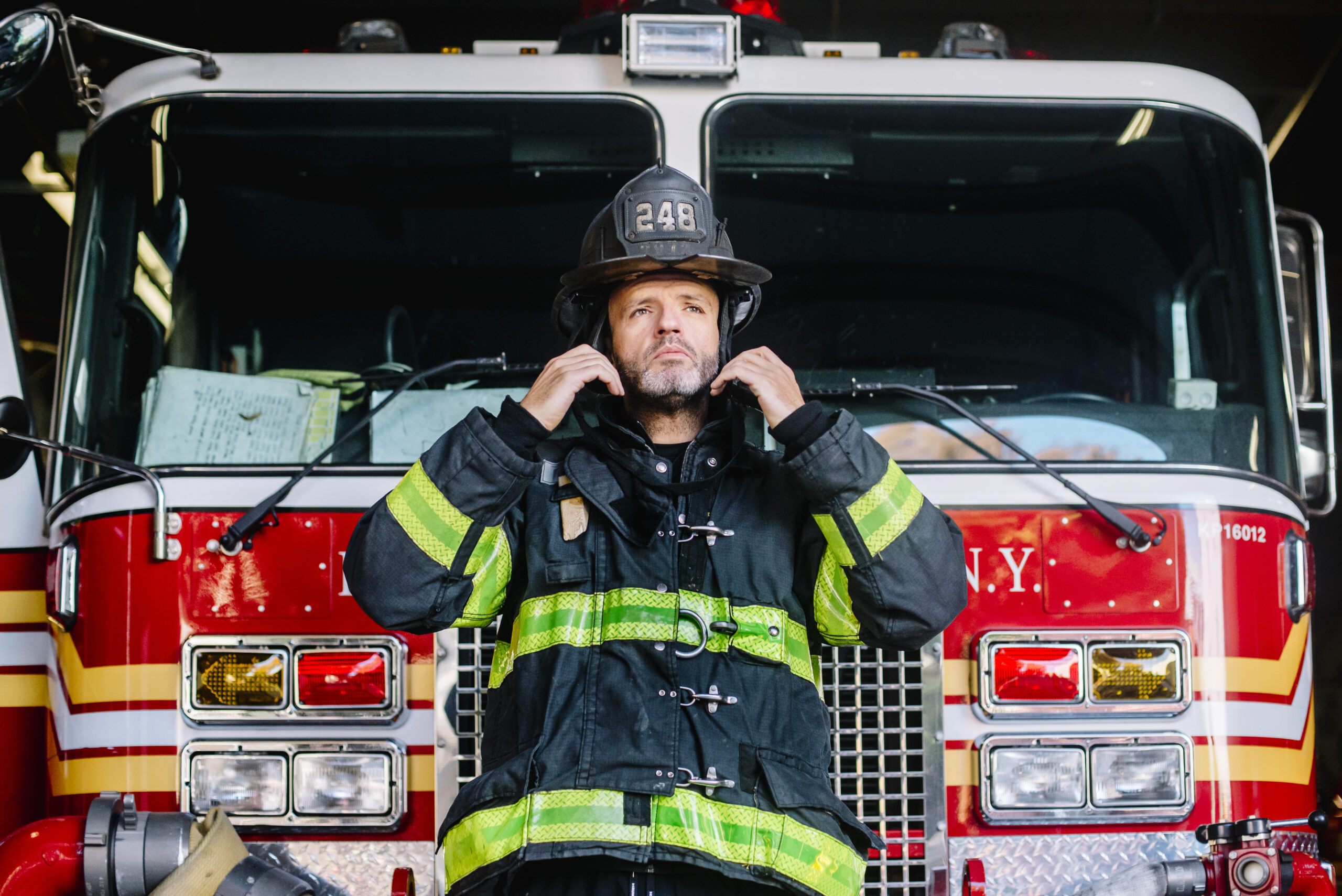
Two summer habits quietly age turnout gear years ahead of schedule: storing it in sunlight and hauling it in hot apparatus cabs and trunks. Aramid fibers lose strength to UV, and moisture barriers age with every deep-heat cycle.
What does sunlight do to turnout gear?
UV degrades aramid fibers — the same chemistry that makes shells flame-resistant makes them UV-sensitive. Faded gear is not just cosmetic: color loss tracks strength loss. A shell that lives on a sunny rack by the bay window can lose meaningful tear strength in a season without seeing a single fire.
Why are cabs and trunks a problem?
- Heat soak: closed vehicles reach barrier-aging temperatures on ordinary summer days — repeated cycles embrittle films and laminates.
- UV through glass adds fiber damage on top.
- Compression under other equipment creases barriers along the same lines daily.
- Off-gassing and fuel vapors in trunks add chemical exposure between calls.
What does good summer storage look like?
Shaded, ventilated racks out of direct sun; gear hanging, not compressed; personal vehicles as gear lockers only when there is no alternative — and then in gear bags, out of sunlight, never for weeks at a stretch. For POV-response departments, a gear bag policy is a cheap protection upgrade.
FAQ
How can we tell if UV has damaged a shell?
Visible fade is the flag; strength verification is inspection work — flag suspect garments for the next advanced inspection.
Are window-covered racks enough?
Blocking direct sun helps most; UV film on bay windows helps more. Distance and shade beat glass alone.