
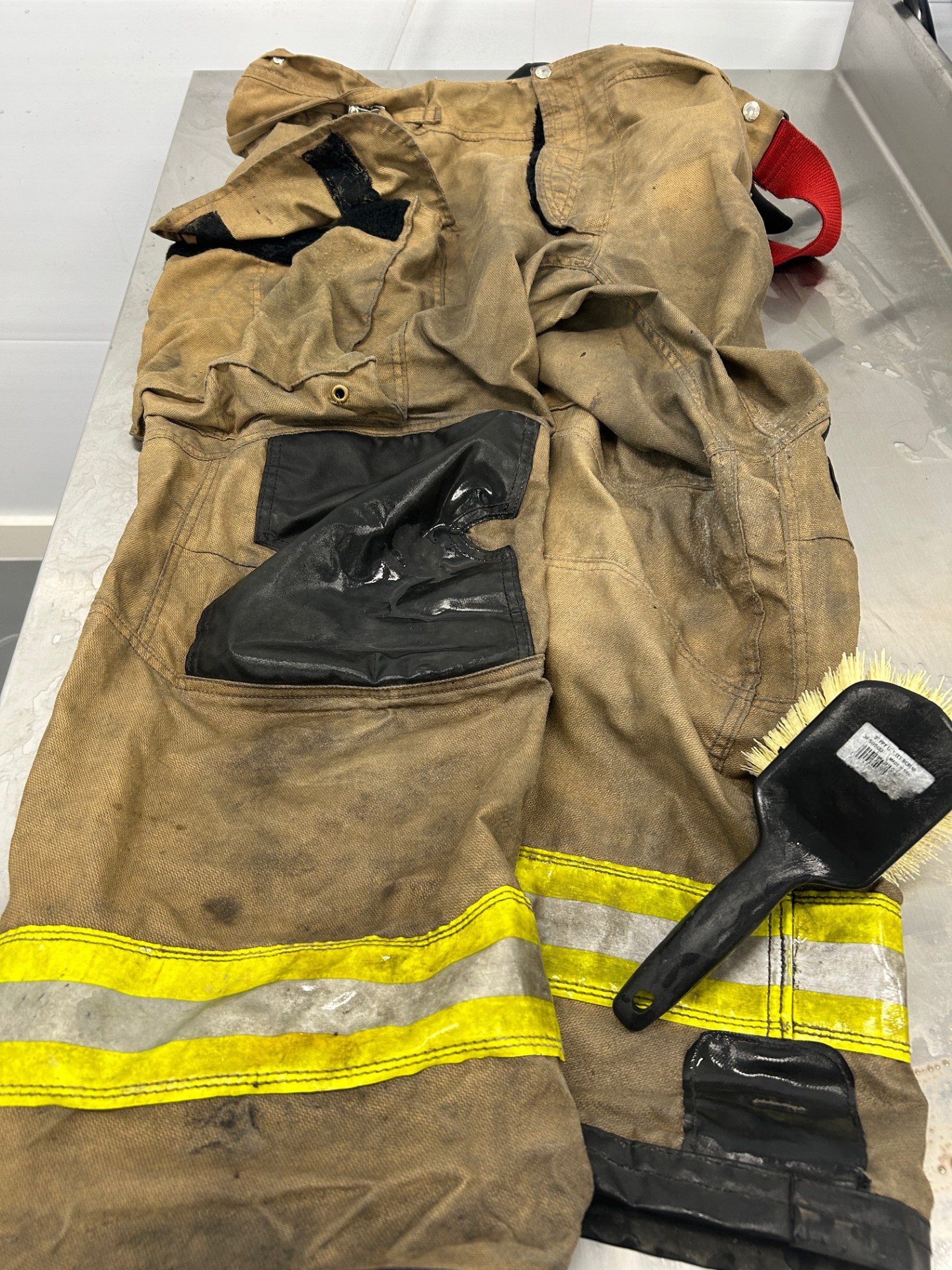
Four repairs account for most of the work on our bench: reflective trim replacement, seam restitching, hardware replacement, and moisture-barrier patching. All four, done correctly, return gear to service at a fraction of replacement cost.
What are the most frequent turnout gear repairs?
- Reflective trim replacement. Trim cracks and delaminates long before shells wear out. Replacement restores visibility compliance without touching the garment’s protective layers.
- Seam restitching. Popped stitching on cuffs, crotches, and pocket corners — caught early, a quick fix; ignored, the start of a tear.
- Hardware swaps. Zippers, snaps, and hook-and-loop lose grip with heat and grime. New hardware, sewn to manufacturer spec, beats a bunker coat that will not stay closed.
- Moisture-barrier patches. Small barrier breaches can often be patched with manufacturer-approved materials — but only after testing confirms the surrounding barrier is sound.
What makes a repair “compliant”?
NFPA 1850 requires repairs to be made with materials and methods matching the original manufacturer’s construction — same thread types, same seam construction, same barrier materials. That is why station-level sewing is limited and why verified ISP benches exist.
When is repair the wrong answer?
When damage reaches structural areas, when barriers fail testing broadly rather than locally, or when a garment approaches retirement age — then repair money is better spent on replacement. We tell departments which side of the line each garment falls on, honestly.
FAQ
Does a repair void the manufacturer warranty?
Proper repairs by a qualified ISP using approved materials maintain the garment’s serviceability; undocumented station repairs are what create warranty problems.
How do we get a repair quote?
Request a quote — include photos and we can often price it before the gear ships.