
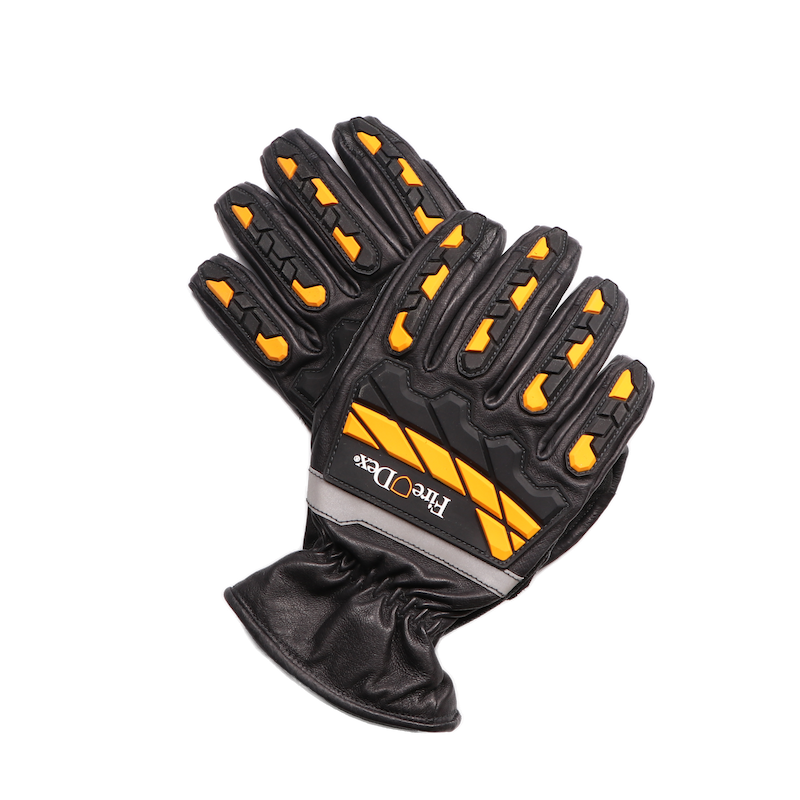
A firefighting glove that does not fit fails both directions: too big and you lose the dexterity that runs radios, halligans, and door handles; too small and compressed insulation loses loft — which is how tight gloves cause burns. Fit is a protection spec, not a comfort preference.
Why does oversized fail?
Excess fingertip length turns fine tasks into fumbling — SCBA buckles, rope work, patient care — and loose gloves shift under grip, ending in doffed gloves at exactly the moments hands need protection. The classic failure is not the glove burning; it is the glove coming off.
Why does undersized fail?
- Compressed thermal layers: insulation works by loft; a tight glove squeezes the loft flat and conducts heat straight through — palm and finger burns in “protected” hands trace here constantly.
- Circulation and fatigue: tight gloves cost grip strength by the minute.
- Donning failure: gloves that fight going on over wet wristlets get skipped — the worst outcome of all.
How should gloves be fitted?
Measured, not guessed: hand circumference and length against the manufacturer’s chart, tried on with the ensemble’s wristlet interface, and checked for fingertip contact with modest excess. Sizes differ between manufacturers and models — refit when brands change, and re-check after gloves are washed and dried the first time.
FAQ
How often should gloves be replaced?
They are consumables — inspect at the routine check (seam integrity, liner attachment, hardening from heat) and expect replacement well before the ensemble around them.
Do gloves ride the annual inspection?
Yes — ensemble elements inspect together. Send them with the batch.