
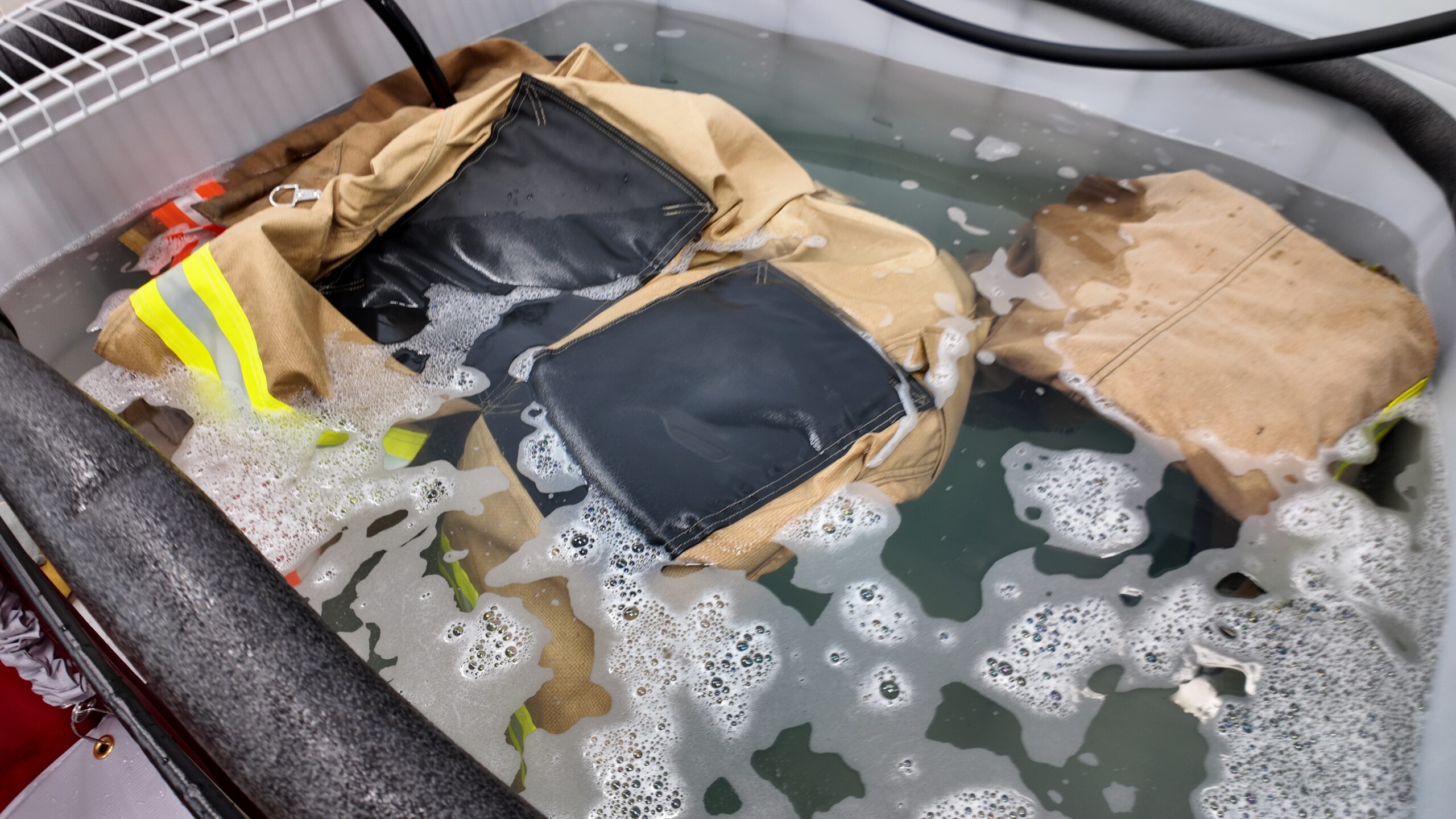
Bunker pants die from the bottom up and the middle out: knees, cuffs, crotch seams, and suspender points fail long before the rest of the garment. Knowing the four zones turns a two-minute monthly look into real early-warning coverage.
Where do bunker pants wear out first?
- Knees. Crawling grinds the outer shell against every surface a fire building offers. Reinforcement layers absorb it — until they wear through. Look for fraying at reinforcement edges and thinning between layers.
- Cuffs and hems. Boot hardware, pavement, and apparatus steps abrade hems constantly. A frayed hem wicks water and tears further with each donning.
- Crotch and inseam. The highest-stress seams in the ensemble — stepping over sills, climbing, straddling. Popped stitches here spread fast.
- Suspender hardware points. Load concentrates where suspenders anchor; check for elongated holes, cracked hardware, and pulled stitching.
What does each finding mean?
Shell abrasion without layer penetration: repairable reinforcement. Any breach reaching the moisture barrier: out of service until repaired and verified. Seam failures: bench repair with matching construction — never station sewing. Hardware: replace with manufacturer-spec parts only.
How do you slow the wear down?
Rotate two sets where possible, keep knees off unnecessary abrasion during training, and wash gear before grit grinds through fibers — embedded soil is sandpaper inside the weave.
FAQ
Are knee repairs worth it on older pants?
If the garment is early in its service life, yes. In its final years, put the money toward replacement — we will tell you which side of the line you are on.
Who should do the monthly look?
The wearer — trained once on the four zones. Escalate anything found to your officer and get repairs quoted early.