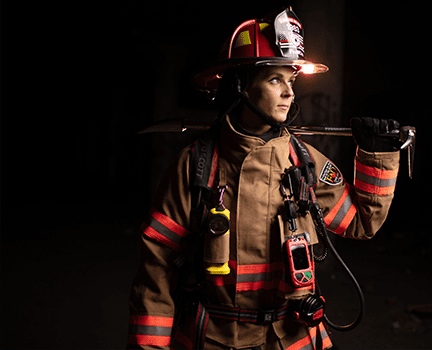
New firefighter, four habits: check your gear when you take the shift, wash it when it takes smoke, dry it completely before it rides again, and report damage the day you find it. Learn these in month one and they will protect you for a career.
Habit 1: the daily look
Sixty seconds when you rack your gear: closures run smooth, no new tears or char, trim intact, hardware clicks. You wear this gear at your worst moments — be the first to know when something changes. You are the sensor the inspection system relies on between annual visits.
Habit 2: exposure means wash
If you worked a fire, your gear is carrying it — soot you can see and chemistry you cannot. Contaminated gear transfers to your skin, your truck, your station recliner. The wash is not fussy; it is the same logic as washing your hands, scaled up. Learn the extractor this month: loading, dosing, which cycle. Ask — nobody respects a rookie less for learning the machine.
Habit 3: dry before duty
A wet liner steams you in a fire and mildews on the rack. Cabinet dryer if your station has one; hung with airflow if not; never a heat register, never sunlight, never damp into service.
Habit 4: report, don’t hide
Damage reported early is a cheap repair; damage hidden is a failure at a fire. No department worth joining punishes a gear report. Tag it, tell your officer, log it.
FAQ
Whose job is gear care — mine or the department’s?
Both: your habits, their program. The department schedules the professional inspections; you own the days between.
What one thing do veterans wish they’d learned sooner?
That dirty gear was never a badge — it was a dose. The generation before you paid for that lesson; take it free.