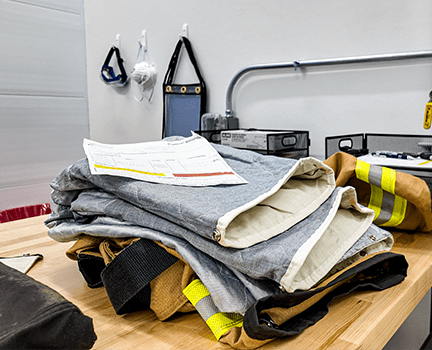
Every turnout shell is a blend of a few high-performance fiber families — aramids and PBI chief among them — and the trade-offs between blends come down to thermal performance, abrasion durability, weight, and price. Here is the vocabulary, minus the marketing.
What are the fiber families?
- Para-aramids (the Kevlar family): tensile strength and cut resistance — the load-bearing muscle in most blends.
- Meta-aramids (the Nomex family): flame resistance and thermal stability — the classic FR workhorse.
- PBI: exceptional flame and high-heat performance, famously stable in flashover-range temperatures — premium price.
- Blends and ripstop weaves combine them: a PBI/para-aramid shell behaves differently than an all-aramid one, and the weave pattern matters nearly as much as the recipe.
How should a department choose?
Match the shell to the fire load and the budget honestly: high-volume structural departments amortize premium shells over heavy use; low-volume departments often serve crews better with mid-range shells and the savings put into second sets or better care. Every shell in the catalog meets the applicable ensemble standard — above the floor, you are buying durability curves and comfort.
What does care have to do with fabric choice?
Everything: UV, embedded grit, and wrong-chemistry washing age every fiber family early. A well-maintained mid-range shell routinely outlasts an abused premium one — we see both cases on the bench weekly.
FAQ
Does shell color matter?
Mostly preference and heat-visual trade-offs — but fade tracking is easier on lighter shells, and all colors fade under UV abuse.
Where can we compare specific gear lines?
Our Fire-Dex page covers the lines we carry — request a quote for blend options by budget.