
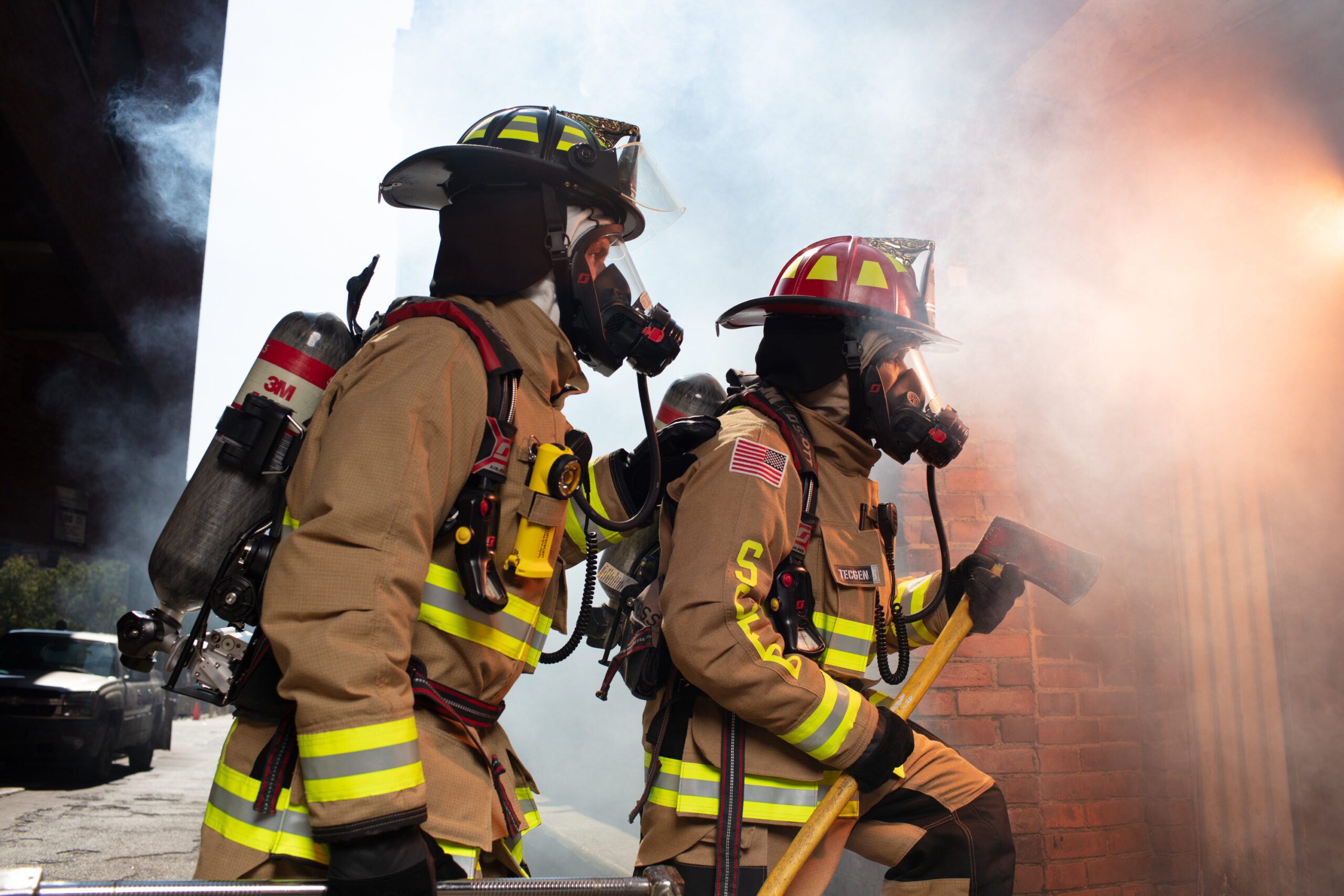
Dirty gear is hotter gear: contamination clogs the moisture-vapor pathways your ensemble uses to shed body heat, and saturated liners add carried weight — both of which push firefighters toward heat exhaustion faster. Cleaning is heat-stress management, not just hygiene.
How does contamination raise heat stress?
Your ensemble’s breathability depends on moisture vapor moving out through the layers. Soot, oils, and salt progressively seal that pathway — sweat that cannot evaporate cannot cool you. The insulation still keeps fire heat out, but your own metabolic heat stays in. Firefighters describe old dirty gear as “running hot”; the physics agrees with them.
What does the weight math look like?
- A sweat-saturated liner system carries meaningful extra pounds through an entire incident
- Embedded contamination adds load a clean garment does not have
- Every added pound raises metabolic output — which produces more heat inside a garment already breathing badly
The cycle feeds itself, and it feeds hardest in July.
What breaks the cycle?
Washed liners restore vapor transfer; rotation lets gear dry fully between wears; and rehab discipline — coats open or off, hydration early — handles the incident side. If crews complain a particular set “cooks,” take it seriously: it is often the dirtiest liner in the rotation.
FAQ
Can cleaning really change how hot gear feels?
Yes — crews routinely report gear “breathing” again after an advanced clean; restored vapor transfer is exactly why.
Is heavier gear ever a barrier problem?
A liner that stays heavy when dry may be holding contamination deep in its layers — flag it for advanced cleaning and inspection.