
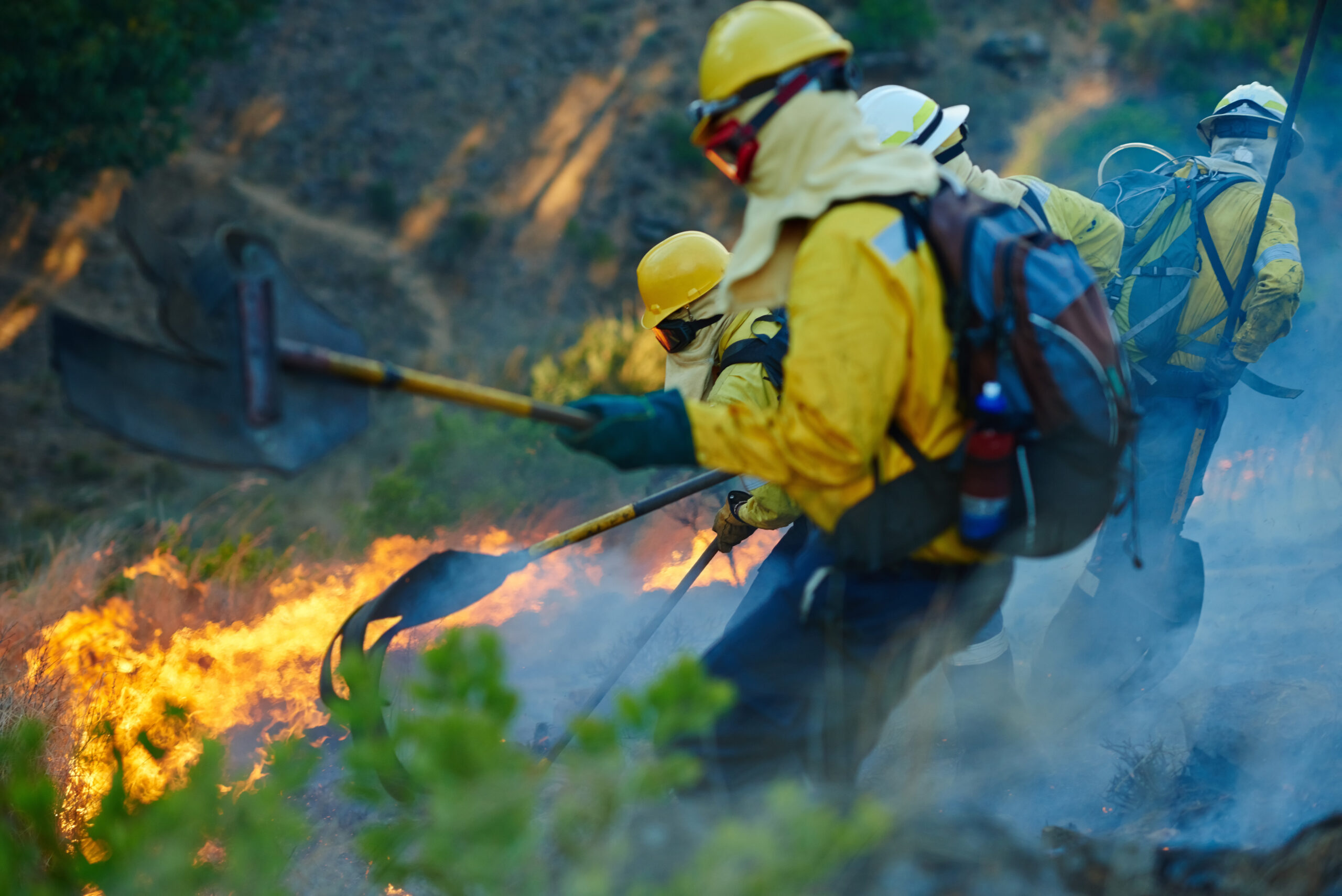
Every June the same patient walks into our shop: wildland gear from the season’s first fires, carrying the same four conditions — embedded grit, early char, UV fade, and seam damage the wearer has not noticed yet. A decade of Junes makes the pattern worth publishing.
What does the June intake look like?
- Grit saturation. Fine ash and soil work into the weave and act as internal sandpaper — gear washed promptly sheds it; gear that waits grinds through its own fibers.
- Radiant-heat char at forearms and shins — usually superficial on first fires, and exactly what a trained eye needs to classify before it goes back out.
- UV fade already visible on gear stored badly since last season — March storage sins surface in June.
- Popped inseams and gaiter wear from the first hard weeks of walking fire line.
Why does early-season service matter most?
Because wildland damage compounds: grit accelerates abrasion, small seam failures spread under pack straps, and the season’s heaviest fires are usually still ahead in July and August. Gear serviced in June fights the whole season; gear that waits fights half of it in degraded condition.
What should departments do this month?
Wash everything that has seen fire, walk the four patterns above on every set, and send anything questionable in now — mid-summer turnaround is faster than you think and far faster than August. Start with a quote.
FAQ
Does ash exposure require anything special?
Prompt washing — wildland ash is alkaline and holds fine particulates; it should not ride in the weave for weeks.
Can structural and wildland gear ship together?
Yes — separately bagged, per our turn-in instructions.