
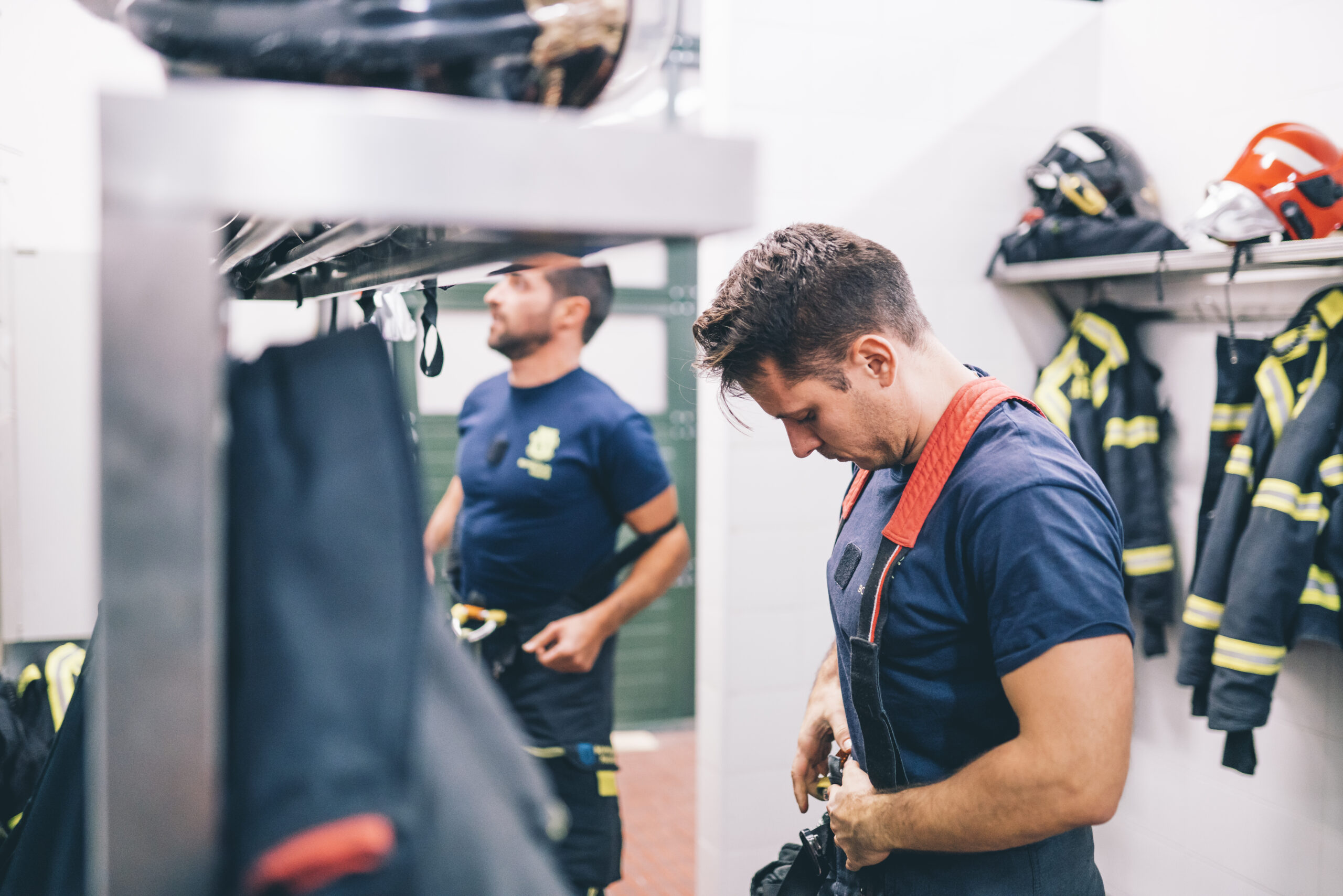
The layer under your turnout gear is part of your protective system: 100% cotton or certified station wear adds thermal margin, while everyday synthetics can melt into skin at temperatures your ensemble routinely encounters. The t-shirt question is a safety question.
Why do synthetics under gear cause injuries?
Polyester and nylon athletic wear melts in the temperature range of a working fire’s thermal spikes. Under a compressed ensemble — a shoulder strap, a kneeling leg — heat transfer concentrates, and a melted synthetic layer bonds to skin, turning a survivable burn into a graft. Cotton chars instead of melting; certified FR station wear resists further still.
What should the under-layer be?
- Best: station wear certified to the applicable NFPA station-wear standard — engineered for exactly this job.
- Good: 100% cotton shirts and pants — the classic answer, still valid.
- Avoid: polyester blends, nylon shorts, and anything labeled “performance” that would melt on a stove burner.
Does the under-layer affect gear care?
Yes, two ways: FR station wear has its own laundering rules (fabric softener kills FR treatments), and a proper base layer absorbs the sweat load that otherwise saturates your liner — wash the cheap layer often and the expensive one lasts longer.
FAQ
Are athletic compression layers ever okay?
Only if specifically FR-rated. Standard compression wear is exactly the melt-risk fabric to keep away from fire.
Does NFPA 1850 govern station wear?
Station wear has its own standard; 1850 governs the ensemble over it. Care rules for both matter — ask us where they intersect.