
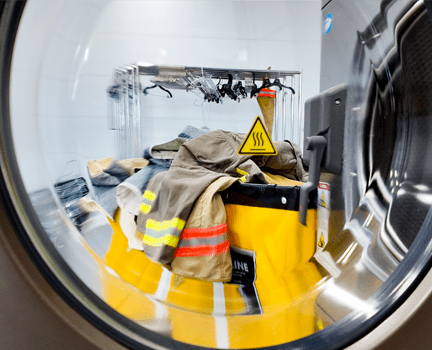
In summer, the biggest contamination source inside your gear is you: sweat deposits salt, body oils, and bacteria into liners faster than most departments wash them out. Hot-weather months call for a liner-focused care rhythm.
What does sweat actually do to a liner?
Salt crystals abrade fibers from the inside as the liner flexes. Body oils feed bacteria — the source of that locker-room gear smell — and coat moisture-wicking fibers until they stop wicking. A saturated liner also transfers heat differently, adding to heat stress on the next call.
How should summer care differ?
- Wash liners on their own cadence. Liners detach for a reason — they can cycle through the extractor more often than shells.
- Dry completely before reassembly. A liner zipped in damp grows mildew inside the ensemble.
- Rotate where possible: two liners per shell keeps one drying while one works.
- Rinse the sweat load after hot training days — even without smoke exposure, the salt went in.
Does frequent washing wear the liner out?
Manufacturer-spec washing is gentler than the salt and bacteria it removes. Liners fail from contamination and abrasion far more often than from laundering — the wash is the protective act.
FAQ
How many liner washes per summer is reasonable?
Let exposure decide, not the calendar: after every working fire and after heavy-sweat events. For busy companies that can mean weekly.
Our liners smell even after washing — now what?
Persistent odor means embedded bacteria or oils a routine wash cannot reach — an advanced clean resets it. Send them in.