
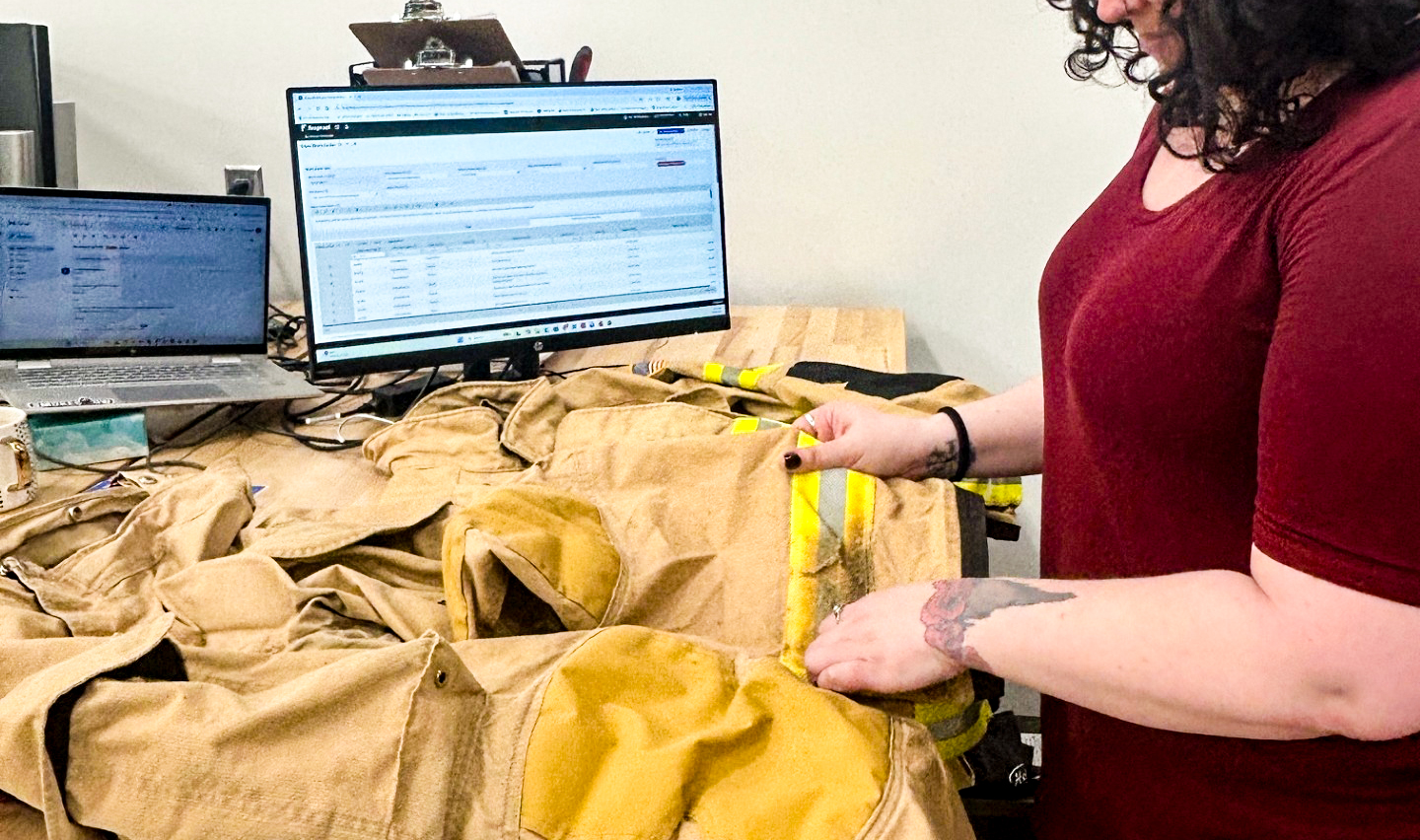
An advanced inspection report is not a receipt — it is a condition map of your department’s protective envelope, and reading it correctly turns inspection spend into planning intelligence. Here is how to work through one, section by section.
What are the sections of an inspection report?
- Garment identification: serials, manufacture date, assignment — confirm these match your records; mismatches mean your inventory has drift.
- Findings: every defect noted, located, and classified — cosmetic, repairable, or condemning.
- Work performed: cleaning method and any repairs completed, with materials.
- Test results: where applicable — including liner integrity testing.
- Disposition: returned to service, repaired and returned, or recommended for retirement.
Which findings deserve command attention?
Patterns, not individual defects. Five sets with barrier wear at the same shoulder point to an SCBA strap issue. A rash of hem abrasion suggests gear dragging on apparatus steps. One coat’s popped seam is a repair; the same seam on eight coats is information about how your crews work — or how the gear fits them.
How should reports feed your budget?
Retirement recommendations arriving two budget cycles early are a gift: they convert emergency replacement purchases into planned line items. Track the average age at which your gear starts failing — that number, not the maximum service life, is your real replacement planning horizon.
FAQ
What if we disagree with a condemnation?
Ask — a good ISP shows you the defect and the standard behind the call. We would rather walk you through it than have doubt in the file.
How long should reports be kept?
For the life of the garment plus your records-retention policy — they are the garment’s medical chart. Schedule this year’s inspection and start the file.