
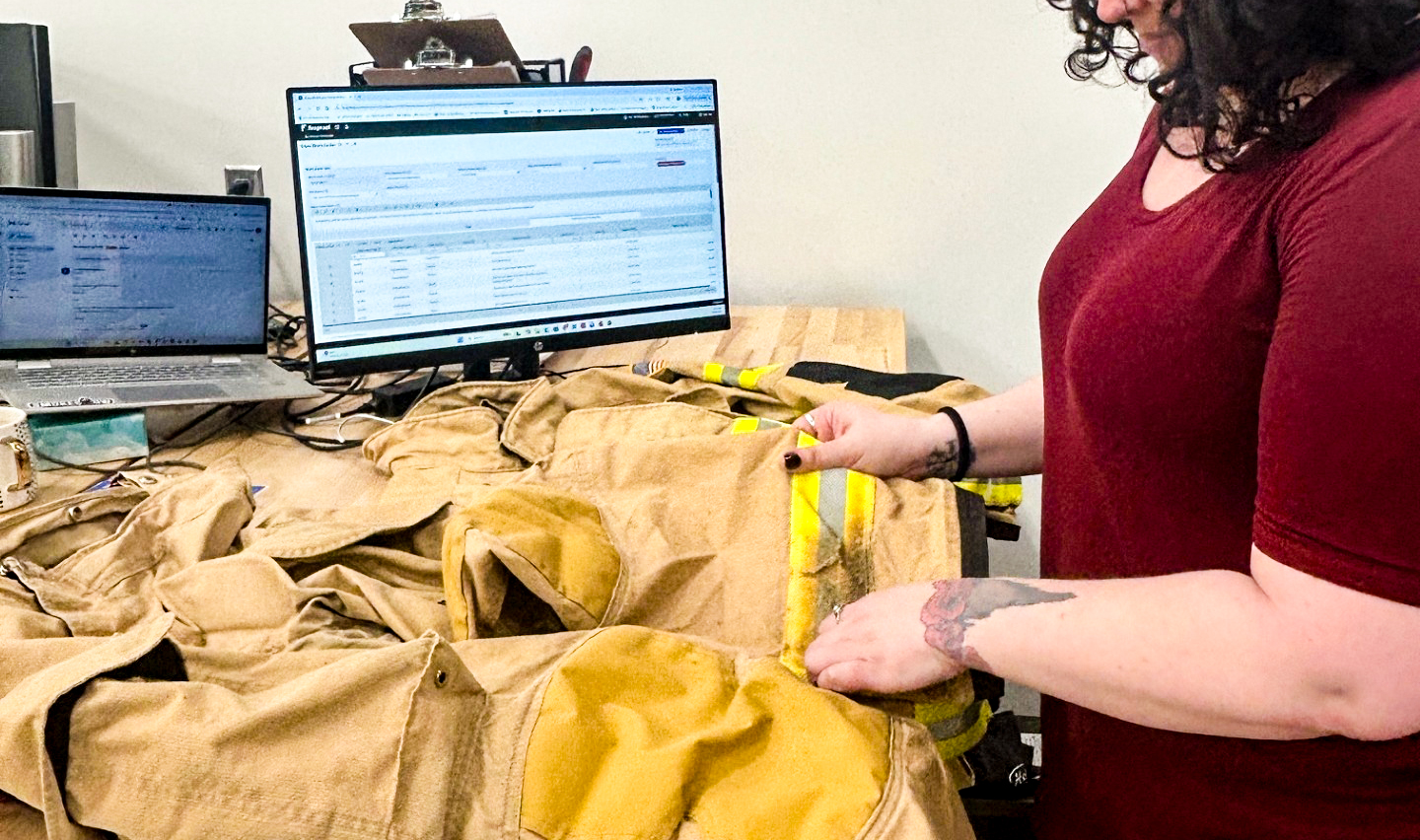
When you send your turnout gear off for cleaning or repair, you aren’t just looking for a “wash and dry.” You are looking for a guarantee of safety. In our latest sit-down, Michelle from Heiman Fire ISP spoke with industry expert Jim Evans to clear up a common misconception: the difference between a standard ISP and a Verified ISP.
The “Pop’s Candy Shop” Risk
As Jim points out, a regular Independent Service Provider (ISP) can be anyone. Without verification, you might be sending life-saving equipment to a shop that uses the wrong thread, incorrect patches, or cleaning agents that don’t actually remove toxins. Jim refers to these as “pop’s candy shops”—they might look the part, but they lack the technical setup to ensure your gear meets NFPA standards.
What Makes an ISP “Verified”?
Verification isn’t just a badge; it’s a rigorous, ongoing commitment to safety. To be a Verified ISP, a facility must:
- Pass Third-Party Testing: Organizations like UL (Underwriters Laboratories) audit the facility to ensure they meet the highest benchmarks.
- Prove Carcinogen Removal: It isn’t enough to look clean. Verified ISPs must document that their processes effectively remove dangerous carcinogens.
- Guarantee Seam Strength: Repairs are tested to ensure they won’t fail under the extreme stress of a fire.
- Maintain a Quality Manual: Every step must be documented and repeatable.
The Two-Year Rule
Safety isn’t a “one and done” deal. Michelle and Jim discussed the frequency of these checks, noting that verification happens every two years, supplemented by spot audits and internal quality checks.
The Bottom Line: When you choose a Verified ISP like Heiman Fire, you know exactly what you’re getting back: gear that is safe, compliant, and ready for the next call.